
This week's reading
Technological pessimism, educational moralism, and fear of the dark

Several short stories by Edgar Allan Poe: I started a slow on and off reading of Edgar Allan Poe’s short stories a few weeks ago and was able to read several this week, including “The Gold-Bug,” “The Balloon Hoax,” and “The Thousand-and-Second Tale of Scheherazade.”
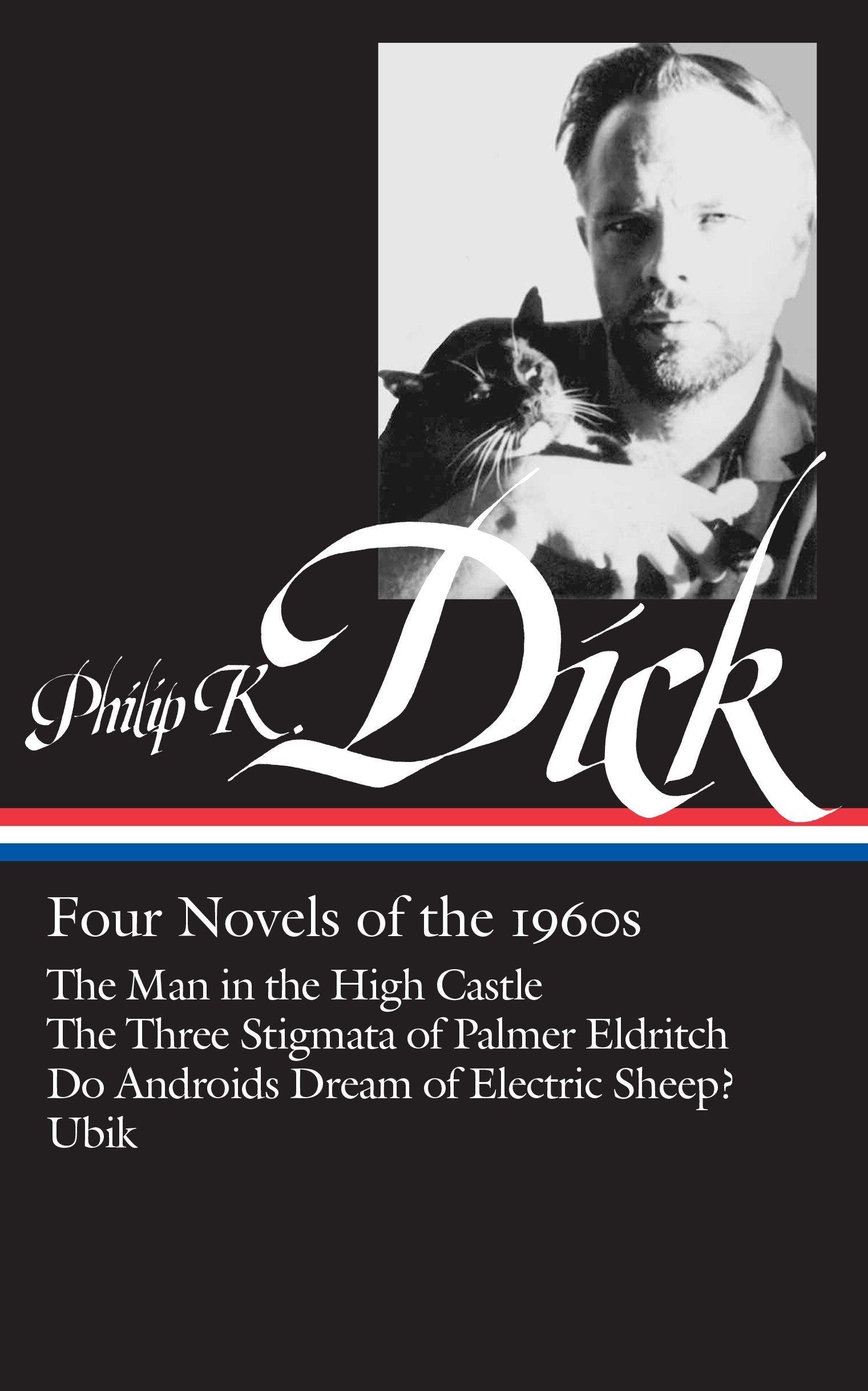
The Three Stigmata of Palmer Eldritch (completed) and Do Androids Dream of Electric Sheep? (in progress) by Philip K. Dick: I have also been reading slowly and, again, off and on, through the major novels of Philip K. Dick over the past several weeks. It is entirely a coincidence that I find myself reading the works of one of the founders of the science fiction genre (Poe) alongside the works of one of the great writers of the twentieth-century heyday of science fiction (Dick). I admit that I am not widely read or thoroughly inducted into the world of science fiction literature and analysis, so my observations may be a bit basic for those who have entered into the deeper and higher degrees of the science of science fiction.
Nonetheless, it has caught my attention thus far that there seems to be something of a contrast between Poe’s treatment of the technological developments of his day and the treatment of Dick. Poe seems to delight in these technological advances and provide them with something of a positive assessment. The short story “The Thousand-and-Second Tale of Scheherazade” perhaps provides the most interesting example—it was certainly, to me, the best of Poe’s stories I have read thus far in that genre.
“The Thousand-and-Second Tale” purports to pick up where the Thousand and One Arabian Nights leaves off with Scheherazade relating a tale told about and by the famous Sinbad. Sinbad, after returning home following his original adventures, relates an additional excursion into the unknown that largely includes a list of various natural and manmade miracles from an antlion pit to hot air balloons and steam engine trains. As Scheherazade relates each of these wonderful observations of Sinbad, the king reacts with incredulity. Poe seems to be emphasizing the wonderous nature of the discoveries and inventions of his day, such that those of a thousand years before could not imagine would exist. “Truth is stranger than fiction,” as the epigraph to the story has it, and more wonderful.
The technology in Dick’s novels, however—at least those I have read so far and certainly in The Three Stigmata of Palmer Eldritch—is not wonderful or miraculous. The new technologies, including video phones (“vidphones”) and personal cooling devices, are all pieces of an environment that is hostile to human life and flourishing. What should be viewed as miracles—traveling to Mars and Venus, making contact with alien species, and so on—are instead viewed either as so humdrum as to lack significance or as contributors to the decline in human wellbeing.
This decided declined in authors’ estimation of the ability of technology to improve human life perhaps stems from the general pessimism about progress that seems to follow the events of the early twentieth century. It might have its roots in the back-to-nature movement of the turn of the twentieth century exemplified by people like Horace Kephart, a biography of whom I finished reading just last week. Of course, it seeds might be even earlier. Poe, after all, envisions the king finally killing Scheherazade at the end of this 1002nd tale!
Pinocchio by Carlo Collodi: Jacob Allee, on his Substack “Study the Great Books,” discussed what makes a story a “good story” in a recent post. One of his claims that stood out to me is that “when children are very young, roughly from birth to 12 years old, they ought not to read (or have read to them) anything but morally praiseworthy stories” that include only such characters as “honorable knights and virtuous princesses and evil witches and dragons.” I have encountered and grappled with a similar claim from a classical educator whom I respect very much concerning the teaching of history. When teaching history to elementary-age students, this educator insisted, moral ambiguity should be altogether avoided in favor of presenting heroes and villains for the sake of moral clarity leading to moral development.
I have long grappled with this question and not yet found a satisfactory answer. Not only is this a difficult assertion that needs to be considered and grappled with while reading (as I am now doing) a story like Pinocchio, about a very naughty old man-mocking, cricket-murdering puppet indeed(!) with one’s children, but I have also grappled with this question in my teaching of literature and especially of history to children of various ages.
It is now the vogue in contemporary education to eschew anything that resembles admiration for the great men of the past. I have had students enter my classroom in the middle and high school grades that knew Thomas Jefferson had an affair with an enslaved woman and not that he had written the Declaration of Independence. (To be quite honest, with the current state of things in education, I’m impressed whenever I encounter a public school student who even knows who Thomas Jefferson was.)
Certainly, this noxious contemporary tendency toward a sort of combined presentism with the moralism of the “woke” neo-Puritans is a thing to be avoided by good, honest educators. Children must have heroes. To look back with a scrunched face and an upturned nose toward every figure of the past, no matter their accomplishments, is not only supreme ignorance but supreme ingratitude and symptomatic of an immaturity of thought.
On the other hand, it seems to me disingenuous at best and perhaps dangerous to deny the full truth of history to even young children. Michael Harriot’s recent criticism of classical education during an appearance on MSNBC’s “The ReidOut” comes to mind here. (Read my response at The Washington Examiner here). While Harriot’s comments are nonsense (and his bizarre follow-up/doubling down on Twitter even more so), even a broken clock is right twice a day. If classical educators do not teach that George Washington was a slave owner, as Harriot accused us of doing, we risk becoming a parody of ourselves—nothing more than moralists longing in vain for bygone days of yore rather than adventurers on the road to Truth in its fullest essence.
It may be that there is no good way to handle this subject other than striking a subtle balance based on the abilities of both student and teacher. At what age ought one to move from Bulfinch’s sanitized retellings to the violent, sexual realities of Greek mythology? At what age ought we to tell students that the same man who is the Father of our Country also owned human beings as property? At what age ought we to read Pinocchio with our children? There is no easy answer, just is there are no easy answers to the complexities of life these very stories and facts present us with.
Up from Slavery by Booker T. Washington: My daughter and I continue our co-reading of this important autobiography.
More 17th century colonial writings: I read this week especially in some of the writings of Increase Mather, Cotton Mather, and others about the Salem Witch Trials. They brought to mind a conversation I’ve had with my children about the source of the ubiquitous human fear of the dark in our deep evolutionary past. The fears that led to such hysteria and tragedy seem to be similarly rooted. The Puritans very much saw themselves in a dark, dangerous world—unmapped, unexplored, and unpeopled (aside from the Indians, variously viewed as savages and potential converts)—surrounded on all sides by potentials threats. This natural fear of the unknown coupled with their exuberant religious zealotry produced a poisonous mixture in the form of the witch trials. These events are not only something to condemned in our past but a warning to not allow the fear of the unknown to get the best of us in our present and future.